Contact Us:


Wildfire season is here. Columbia REA takes fire safety very seriously. One of the key steps we take is placing our equipment in Fire Safety Mode, known in the industry as “one-shot” operation. This setting helps reduce the risk of ignition from electrical arcs or sparks.
The equipment used to put these settings on “one-shot” is called a recloser. A recloser functions much like a circuit breaker in your home, it automatically shuts off power when it detects a fault. Under normal conditions, a recloser will momentarily open, turning off power to allow the issue to clear. The recloser will then attempt to close, restoring power if the fault was temporary, such as a tree branch briefly contacting the line. If the problem remains, the device will make several attempts to reclose before locking out and turning the power off.
In Fire Safety Mode, or one-shot, the recloser opens immediately at the first sign of a fault—often within a fraction of a second—and does not attempt to reclose. This approach prioritizes wildfire prevention over automatic power restoration.
As a result, outages may last longer. Crews must respond to the location, patrol the affected line to identify the cause of the outage, and manually restore service once it is safe to do so. Depending on crew availability, travel distance, distance of powerline that needs inspected and the location of the fault, restoration times may be significantly longer than under normal operating conditions.
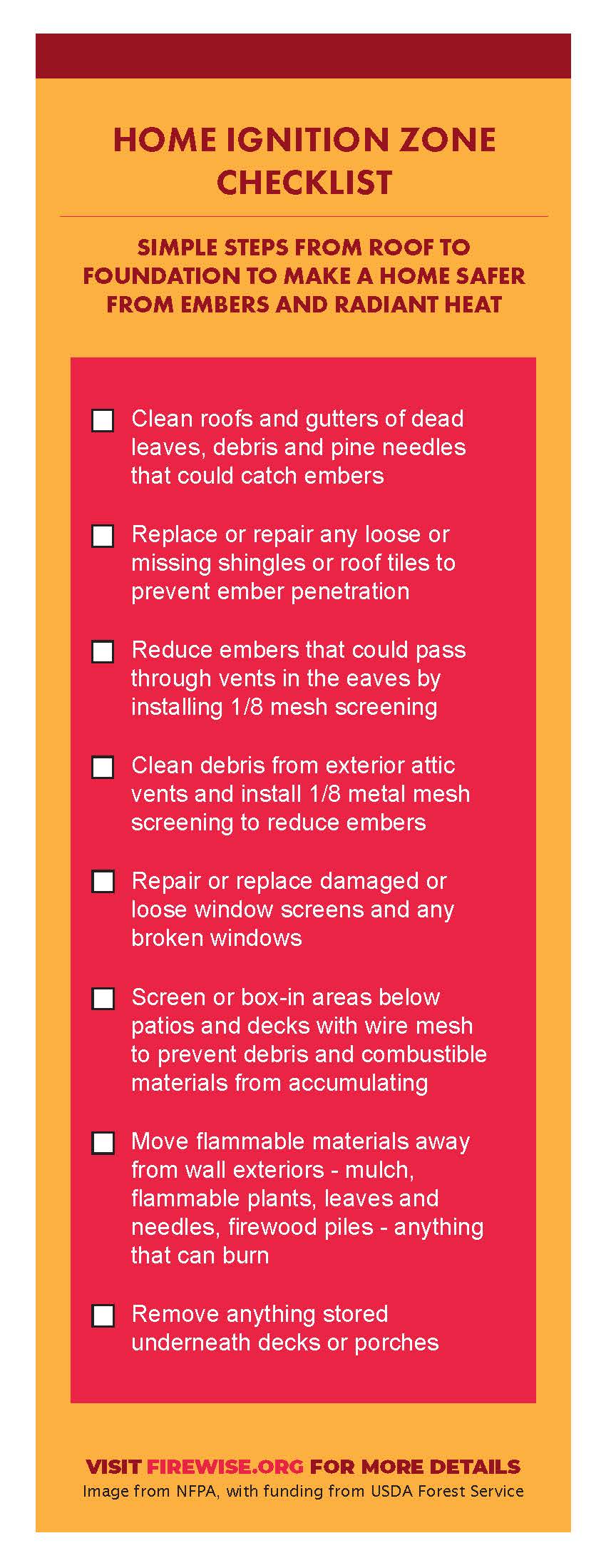
If you live next to a natural area, the Wildland Urban Interface (WUI), you should provide firefighters with the defensible space they need to protect your home. The buffer zone you create by removing weeds, brush and other vegetation helps keep the fire away from your home and reduces the risk from flying embers. Firewise Communities and other wildland fire preparedness education programs provide valuable guidance on property enhancements.
Each year, wildland fires consume hundreds of homes in the WUI. Studies show that as many as 80 percent of the homes lost to wildland fires could have been saved if their owners had only followed a few simple fire-safe practices. In addition, wildland fire related deaths occur because people wait too long to leave their home.
Your fire department takes every precaution to help protect you and your property from wildland fire. However, the reality is that in a major wildland fire event, there will simply not be enough fire resources or firefighters to defend every home.
Successfully preparing for a wildland fire enables you to take personal responsibility for protecting yourself, your family, and your property.
For more information on protecting you and your property from wildland fire, please visit, www.columbiarea.coop/outages-safety/wildfire-mitigation/
Defensible space is a buffer zone around your home or structure created by the removal of weeds, brush and other overgrown natural vegetation. Creating defensible space can decrease fire damage to structures and allow space for firefighting operations while increasing your home’s stand-alone survivability. Landscaping plans that include non-combustible materials, fire-resistant plants and regular mitigation can contribute to the creation and maintenance of defensible space. Special consideration should be given to wind-driven embers which can travel up to a mile or more ahead of the flame front. Regularly inspect or replace outside screens and ventilation points on the home and structures. Also remember the vegetation on your property may be more of a risk to those living around you than to your own home. Work with your neighbors to help reduce the risk to everyone’s homes.