Contact Us:



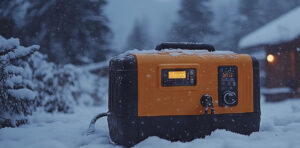
Maybe you want to make sure the food in your freezer stays frozen if there’s a power outage. Or you need to power the well pump that provides you with water. Or you want to be able to use your furnace when the power is out. Or your at-home business requires you to have the power to run computers or other equipment.
My Family loves living in the country, but we tend to have more outages than our city friends. A big ice storm a few years ago left us without power for 4 days, and that is when I became a generator owner! Our generator has a State-approved and inspected connection near our electric meter. We use our generator when needed and just having it helps us feel safer and more secure.
Whatever the reason, whenever there is an extended power outage, there is also the urge by many customers to fire up the portable generator to get electricity flowing to certain appliances. But, if not installed and operated properly, that portable generator can pose a serious safety hazard to Columbia REA line workers and even your neighbors.
The first step in purchasing a portable generator is to identify the things you absolutely cannot live without during a power outage. Usually high on the list will be the refrigerator and the freezer, a good pump, the furnace fan if you have natural gas or oil heat, or maybe some lighting. Smaller heat pumps may work if other larger energy-consuming appliances are shut off. Consider your list carefully, because the bigger the portable generator, the more expensive it will be.
Once you have your list, calculate how much electricity those items need. Look at the wattage of each item on the equipment nameplate or in the owner’s manual and add it all up. Then keep in mind that your generator should not be run continuously at more than 80 percent of its rated capacity. Once you factor in those conditions, you can determine the size of the portable generator you’ll need.
According to the Consumer Product Safety Commission, using a portable generator INDOORS (even if windows and doors are open) can kill you in minutes because the exhaust from the portable generator contains high concentrations of carbon monoxide (a poison that cannot be seen and has no odor). DO NOT place a portable generator inside your home or garage when you are running it.
Make sure extension cords are adequately sized to handle the electricity. If you’re not certain, ask the dealer who sold you your generator or check with an electrician. Also, the generator itself should always be placed outside in a well-ventilated area and you should never refuel it when the engine is hot. Let it cool for at least 10 minutes to minimize the danger of fire.
Instructions on how to properly use a portable generator are included in most operating manuals. You should read them carefully.
If you plan on connecting the generator to your house’s wiring, make sure it is done by a licensed electrician, and make sure you get the proper permits. Also, please let us know that you have installed a generator. Incorrectly installed generators can be hazardous to you and to our linemen working in your neighborhood.
Please call with any questions you may have.

Charlie DeSalvo, Energy Efficiency Specialist
If you have any questions about energy efficiency, email Charlie DeSalvo or call (509) 526-4041.