Contact Us:

Columbia REA’s Net Metering Interconnection Agreement allows members who produce their own power, with a no larger than 100KW (Kilowatt), AC renewable energy systems, such as solar or wind power, to connect to us and get credit for excess generation.
“Net”, in this context, means “what remains after deductions” — in this case, the difference of any energy outflows from your solar to us versus any energy inflows to you from us. Example: you generate 15 KWh from solar but consume 20 KWh from us, and the net is 5.
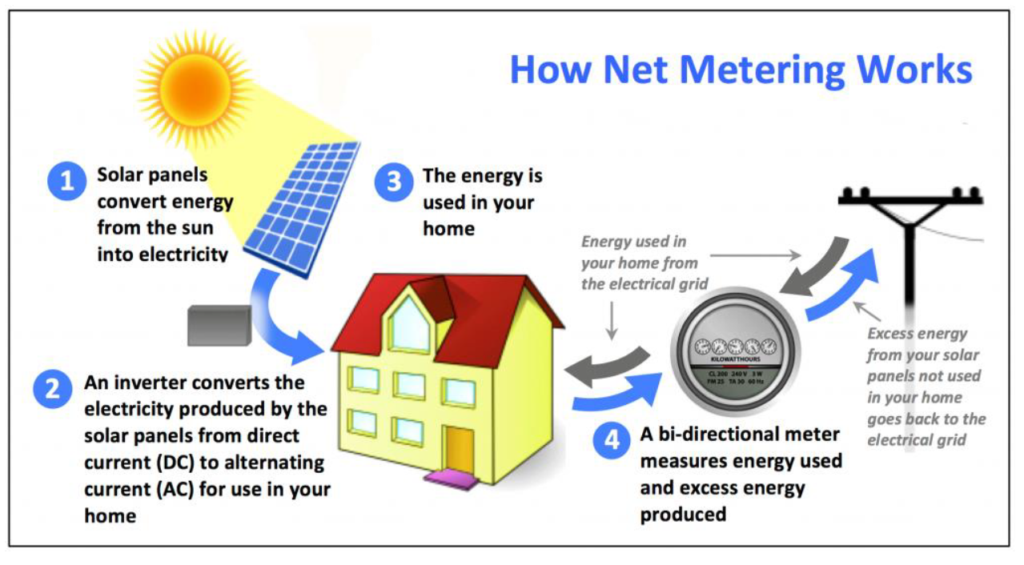
Think of a game of “Tug of War”, with a really long rope and a game that lasts 30 days. Each night the sun goes down and you’re “pulling” power from the system until the sun comes up and then we “pull” from your solar all day long. Minute by minute it changes, (moves back and forth) and varies by how much you use in your house and how sunny it is; but it only maters where you end up at the end of the month. The net amount.
Almost all solar systems installed now cannot operate without being connected to a utility that supplies the power when the system cannot; cloudy days, nights, or time of great usage in the home. The utility connection is on constant standby and helps whenever needed, at lease once a day and more likely many times a day. Net metering keeps track of the back and forth energy flows.
Columbia REA may make available upon request net metering service to any electric consumer that the electric utility serves. The term ‘net metering service’ means service to an electric consumer under which electric energy generated by that electric consumer from an eligible and pre-approved on-site generating facility and delivered to the local distribution facilities may be used to offset electric energy provided by the electric utility to the electric consumer during the applicable billing period.
Our experience is that most solar systems our members choose to install don’t show all the data, or being new to it, the members don’t understand what will be provided by the contractor. It’s generally how the members and their contractors decide to install.
It’s not uncommon at utilities to hear from for new solar customers after they are connected and ask questions about the readings. We explain that their system may not show everything and help as we can. This is fine for some, but other members have decided that they want more information than what their system can produce. Additional energy monitors may help a homeowner see the raw solar production, what the house uses from this production and what the net usage is that comes or goes to the meter. We don’t recommend or endorse specific energy monitors but those who want more details might consider monitors like the below (or something similar) to see all aspects of your energy production and usage. Feel free to call us before you buy if this is important to you.
Sense Energy Monitor Emporia Energy Monitors This Old House Article
Ask your contractor about the following:
Yes, your utility bill may increase due to the lack of solar production on a broken system. Fortunately, your lights and refrigerator stay on, but your electric bill usage will go back to pre-solar levels. We have seen times when a member’s system stopped working for months and they didn’t know, and we can’t always tell from our side. Installing a solar system for electricity makes you a system operator who is responsible to ensure the system is working, and liable for the consequences of it not producing electricity.
Feel free to call us before you buy. 509-526-4041
If you are planning a Solar or other renewable energy system installation, with electrical service from Columbia REA, please follow the below steps now to get approved. We strongly suggest you get Columbia REA approval before signing a contract and construction starts. We also need to make sure the Columbia REA equipment that feeds your location can handle the power you will produce before the installation starts.
The net-meter will not be installed until approved by Columbia REA and the electrical permit is completed by WA State L&I. It’s important that the process is followed, for the safety of the electrical system and those who maintain it. Unapproved and operational electrical generation systems will be disconnected (Utility meter removed), leaving the site without connection to the electric system.
FEE
1. Pay the fee for the application processing, the Net-Meter and Net-Meter installation. Columbia REA requires a non-refundable Interconnection Application fee based on the system size, rated in AC, for either new systems or expansions to existing systems-
Call (509) 526-4041 to pay the fee.
Please note: Any electric generation system installed by a consumer themselves or otherwise, and connected to a Columbia REA electrical service, without Columbia REA approval, may lead us to disconnect that service from the Columbia REA electrical system.
With net metering, you receive retail credit for some or all of the electricity your system generates during the year. These credits apply only to the energy usage portion of your bill (the kWh charge). They do not reduce other charges.
How net metering works:
Columbia REA shall have the sole authority to determine which Interconnection requirements are applicable to member’s proposed generating facility.